Last Updated on June 28, 2026 by Prime Desk
Rising Oil Costs, Costlier Imports and Smaller Product Packs Are Slowly Increasing the Burden on Consumers
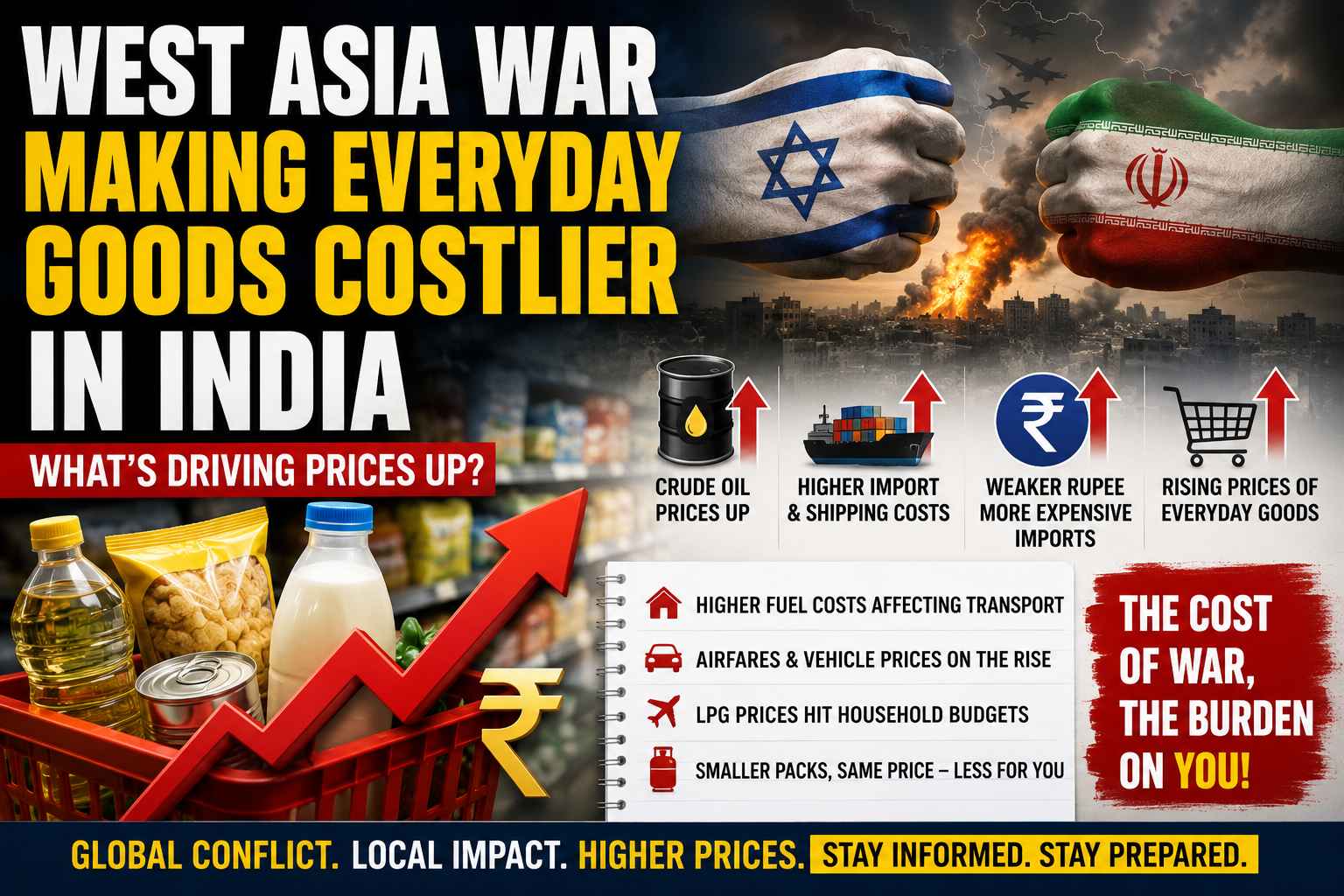
The ongoing conflict in West Asia is no longer a distant geopolitical issue for Indian consumers. Its impact is increasingly visible in household budgets, supermarket shelves, fuel bills and transportation costs.
As global crude oil prices rise and trade routes face disruptions, Indian companies are dealing with higher expenses for raw materials, shipping and imports. Many businesses have already started passing a part of these costs to customers through price hikes, while others are reducing product quantities without changing the printed price.
Industry experts believe the situation could continue to influence inflation and consumer spending in the coming months.
Why the West Asia Conflict Matters to India
India imports a significant portion of its crude oil requirements from overseas markets. Any disruption in major oil-producing regions can directly affect domestic costs.
The ongoing tensions involving Iran, Israel and the United States have created uncertainty in energy markets. As a result, crude oil prices have remained under pressure, increasing costs for manufacturers, transporters and service providers worldwide.
At the same time, higher freight charges and insurance costs for international shipments are adding to the burden faced by businesses.
Rising Costs Reach Supermarket Shelves
Consumer goods companies have been among the first to react to the changing cost environment.
Several major brands have introduced price increases across different product categories. However, companies selling products in low-price segments face a challenge because customers are highly sensitive to even small price changes.
To deal with this situation, many firms are reducing the quantity inside the packet while keeping the retail price unchanged. This strategy helps companies manage costs without immediately increasing the selling price.
For consumers, however, the result is similar — they receive less product for the same amount of money.
Packaging Expenses Also Increasing
The pressure is not limited to raw materials.
Packaging costs have also risen because several packaging components are linked to petroleum-based products. As oil prices move up, manufacturers face additional expenses in producing wrappers, containers and packaging materials.
This is one of the reasons many companies are redesigning pack sizes and exploring cost-saving measures.
Automobile Sector Feeling the Heat
The impact of rising costs has extended beyond the fast-moving consumer goods sector.
Automobile manufacturers have increased vehicle prices as production expenses continue to rise. Higher input costs, transportation charges and imported component expenses are forcing companies to adjust pricing strategies.
Industry observers note that prolonged volatility in crude oil markets could keep pressure on vehicle prices in the months ahead.
Air Travel Becoming More Expensive
Airlines are also facing challenges due to higher aviation fuel costs.
To protect profitability, some carriers have increased ticket prices while reviewing operations on fuel-intensive routes. Aviation fuel remains one of the largest expenses for airlines, making the sector highly sensitive to fluctuations in global oil prices.
Travellers may therefore continue to see elevated airfare levels if fuel prices remain high.
Companies Shift Focus to Cost Control
Businesses are not relying solely on price increases.
Many companies have started reducing discretionary spending, reviewing marketing budgets and cutting non-essential expenses. Others are changing supply chains, sourcing materials from alternative locations and increasing local procurement to reduce dependence on imports.
Some firms are also purchasing inventory in advance to protect themselves from future cost increases.
LPG Price Hikes Add Pressure on Families
Household budgets are also facing additional strain from higher LPG prices.
Recent increases in domestic cooking gas rates have raised monthly expenses for families across the country. The impact is particularly significant for lower-income households that rely heavily on LPG for daily cooking needs.
Commercial users, including restaurants and small businesses, are facing an even larger burden due to rising fuel costs.
Consumers Ultimately Pay the Price
Whether companies increase prices directly or reduce product quantity, consumers eventually bear the impact.
The combination of higher fuel costs, expensive imports, supply-chain disruptions and inflationary pressures is creating challenges for households already managing rising living expenses.
With uncertainty continuing in global markets, economists believe consumers may need to prepare for a period of elevated costs across multiple categories.
Importants
- Rising crude oil prices are increasing production and transportation costs.
- Import-dependent sectors are facing higher expenses due to global disruptions.
- Consumer goods companies have introduced price hikes and smaller pack sizes.
- Packaging costs have increased because of petroleum-linked raw materials.
- Automobile manufacturers have revised vehicle prices upward.
- Airlines are adjusting fares amid rising aviation fuel costs.
- LPG cylinder prices have increased, adding pressure on household budgets.
- Companies are cutting expenses and restructuring supply chains to manage costs.
What Consumers Should Watch Next
The future direction of prices will largely depend on developments in global energy markets and the duration of disruptions in West Asia.
If crude oil prices remain elevated, sectors such as transportation, consumer goods, aviation and manufacturing could continue to experience cost pressures. Any further weakening of the rupee may also make imported products and raw materials more expensive.
For now, consumers are likely to notice gradual increases in everyday expenses rather than sudden sharp price jumps.